What to know
Sun protection lowers the risk of sunburn, premature skin aging, and skin cancer, but sunscreen is not a “cure for aging” and cannot reverse all existing damage. For related guidance, read Protecting Skin From Sun Damage.
Use several protections together: shade, clothing, hats, and a broad-spectrum, water-resistant sunscreen with SPF 30 or higher on exposed skin. A closely connected Healthy Pulse article covers Sunscreen Guide.
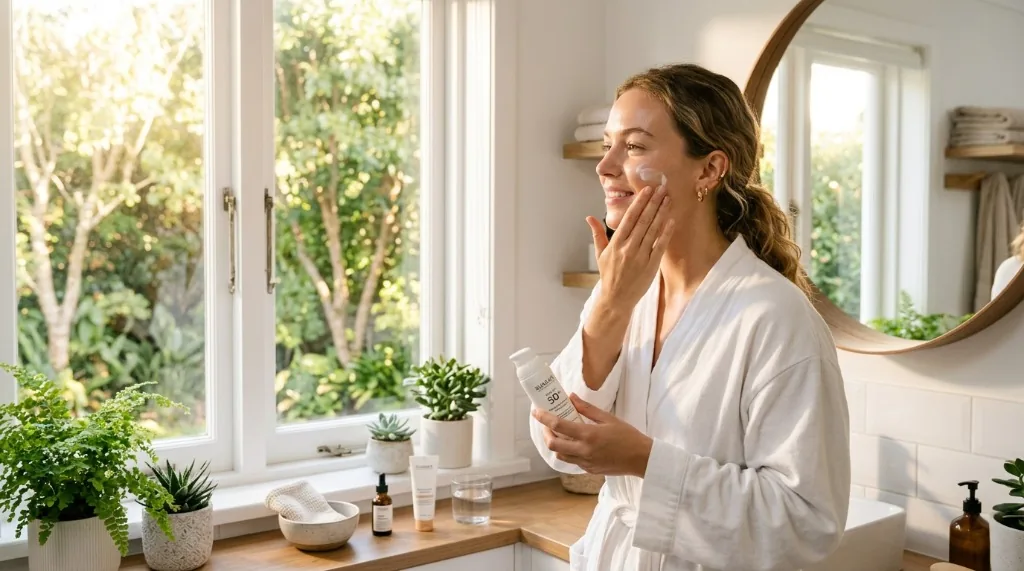
A practical approach
- Apply enough sunscreen before outdoor exposure.
- Cover commonly missed areas such as ears, neck, and the tops of feet.
- Reapply about every two hours outdoors and after swimming or sweating.
- Choose a formula you can use consistently and that suits your skin.
- Seek care for a changing mole, non-healing lesion, severe burn, or concerning pigmentation.

Safety and limits
Infants, allergy-prone skin, pregnancy, and photosensitizing medicines may need product-specific advice. Sun protection reduces risk; it does not make prolonged exposure risk-free. Continue with Sun Protection for another practical perspective.