What to know
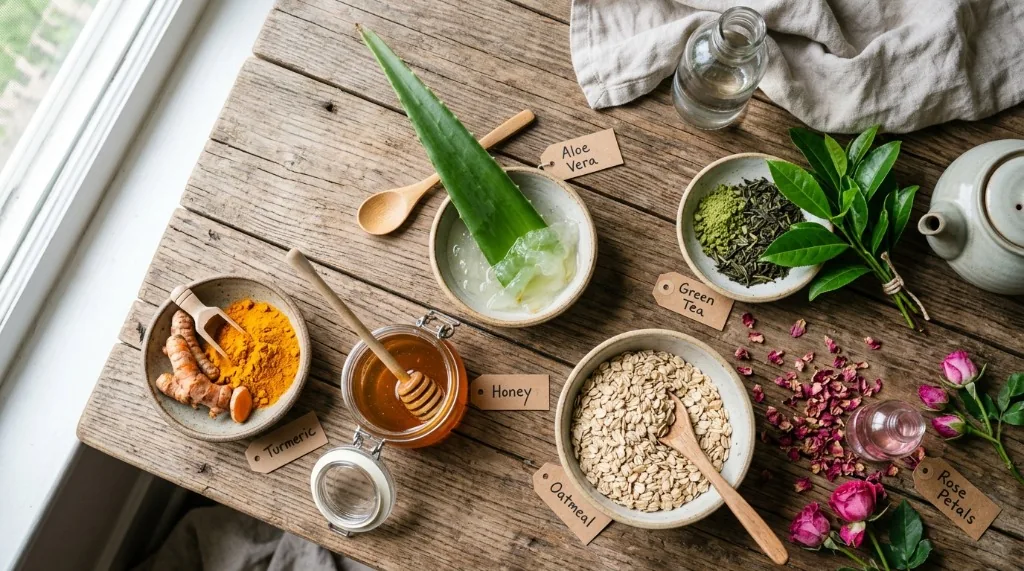
Home Or Botanical Ingredients is often promoted as a home skin remedy, but food chemistry, traditional use, or antioxidant content does not prove that applying it treats acne, scars, pigmentation, wrinkles, or other skin conditions. For related guidance, read Honey for Skin.
A formulated cosmetic is designed for topical stability, preservation, concentration, and directions for use. A raw kitchen ingredient is not an equivalent substitute, and “natural” does not mean non-irritating. A closely connected Healthy Pulse article covers Oatmeal for Skin.
A practical approach
- Prefer products labelled for skin use with a complete ingredient list.
- Patch test a new cosmetic before broader use.
- Do not apply raw citrus, rough particles, or unknown mixtures to irritated skin.
- Use a plain moisturizer and sun protection as the routine foundation.
- Stop immediately for burning, swelling, hives, or blistering.
Safety and limits
Home mixtures can irritate skin, trigger allergy, or become contaminated. Acne, eczema, infection, persistent pigmentation, or scarring may need a dermatologist rather than a DIY treatment. Continue with Honey and Milk for Skin for another practical perspective.